Lighting does more for your videos than almost any other piece of gear. Better lighting makes your camera look like a better camera. It makes your face look healthier, your room look intentional, and your overall production feel more professional. The problem is that most creator advice on lighting jumps straight to "buy a ring light" or "softbox is the only real option" without explaining what actually changes between them, or which one suits your specific setup.
The honest answer is that no single light source is universally best. The right choice depends on your filming environment, the type of content you make, and what you're trying to achieve visually. Here's how to think it through.
Quick Breakdown of How Each Light Source Works
Before comparing them, it helps to understand what each light source actually does and why it produces a different look on camera.
Natural light is sunlight, either direct or filtered through windows. It's free, often beautiful, and produces a soft, even quality when used correctly. It's also entirely outside your control. The amount, direction, and colour of natural light shifts constantly throughout the day and across seasons.
Ring lights are circular LED panels designed to sit directly in front of the subject, often with the camera positioned in the middle of the ring. They produce a flat, even light with a distinctive circular catchlight in the eyes. They became popular through beauty and selfie content because they smooth skin tones and reduce shadows on the face.
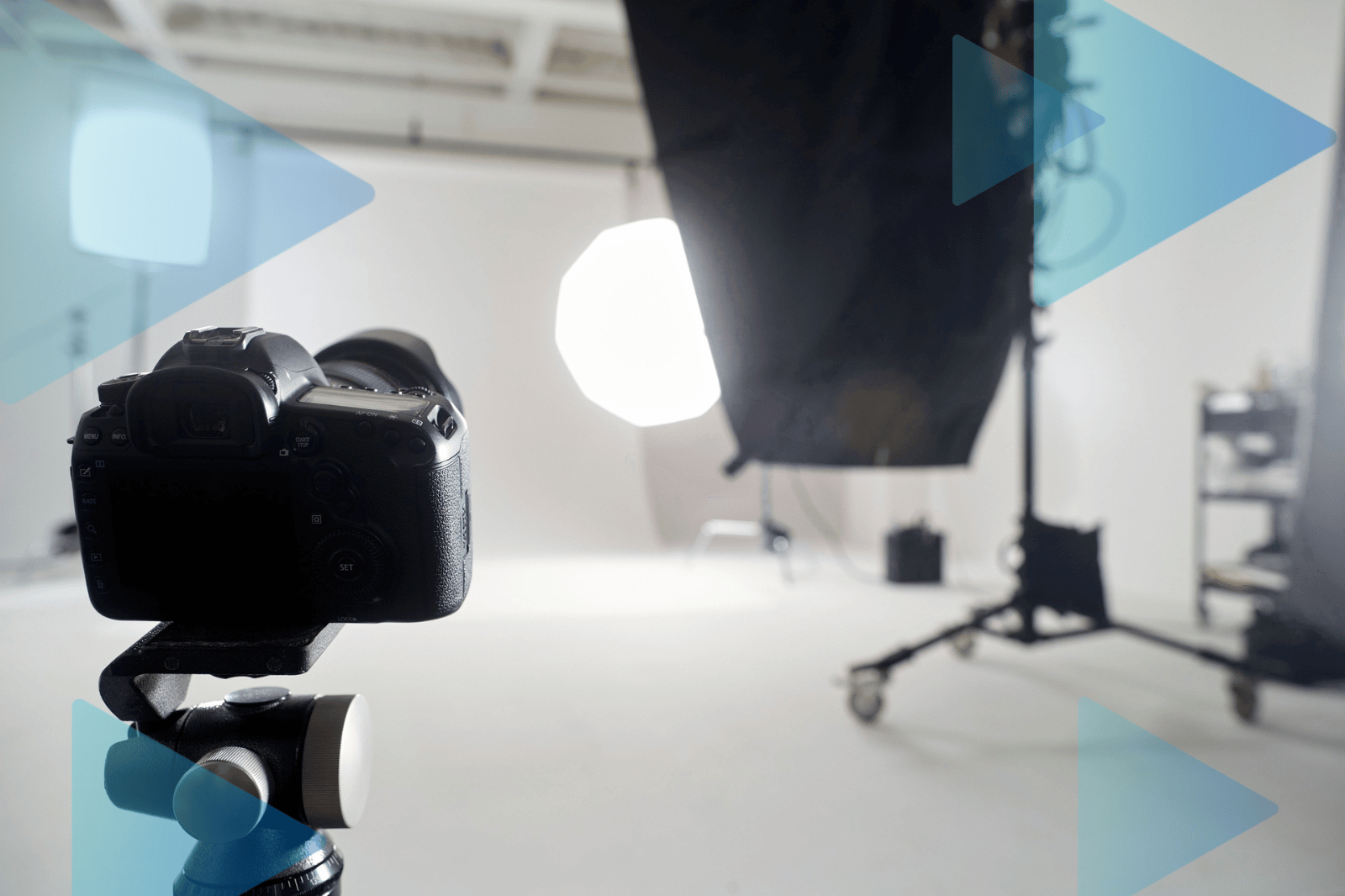
Softboxes are larger, diffused light sources, usually rectangular or octagonal, that produce broad and soft light from one side of the subject. They mimic the quality of light coming through a large window and are the standard in professional video and photography production for that reason.
Each of these creates a fundamentally different look. Once you've seen them side by side, you can usually identify which one a creator is using within seconds of watching their video.
Natural Light: The Pros, Cons, and Why It's Unreliable
Natural light has a romantic appeal in creator advice that doesn't always survive contact with reality. When it works, it's genuinely beautiful. When it doesn't, it can ruin a video before you've even started editing.
The biggest advantage of natural light is its quality. Soft, indirect daylight coming through a large window produces a flattering, three-dimensional look that's hard to replicate with artificial sources at the same cost. There's a reason high-end interview and portrait work often uses window light as a starting point. It also costs nothing, which makes it an attractive starting point for new creators.
The drawbacks are significant and mostly come down to inconsistency. Natural light shifts throughout the day. A video filmed at 10am will look noticeably different from one filmed at 4pm, even from the same window. Weather changes the light dramatically. A cloudy day produces flat, dim light while a sunny one can blow out your exposure with harsh direct beams. Across a longer filming session, the light will visibly change between the first take and the last.
The other issue is scheduling. Natural light forces you to film during daylight hours, in good weather, when the sun is hitting your window correctly. If your job, lifestyle, or location makes that difficult, natural light becomes a constraint rather than an asset.
Natural light is best treated as a supplement rather than your primary lighting plan. It can produce stunning footage when conditions cooperate, but relying on it as your only source means accepting that some of your videos will look noticeably worse than others through no fault of your own.
Ring Lights: Who They're Actually Made For
Ring lights have a reputation problem in creator circles, partly deserved and partly not. They're not the universal solution they're sometimes presented as, but they do work well for specific use cases.
Ring lights produce a flat, even light with a distinctive circular reflection in the subject's eyes (the catchlight). For close-up content where the camera is positioned close to the subject, especially beauty, makeup, tutorial, or selfie-style filming, this look can be appropriate. The flat lighting hides skin texture and shadows, which suits the content.
The honest assessment is that ring lights are best suited for static, close-up, face-focused content where the goal is even illumination rather than visual depth. They were originally popular in beauty and makeup content for a reason. They're also useful as a portable option for creators filming in different locations, since most are compact and easy to transport.
Where ring lights tend to struggle is in wider shots and content with any visual ambition. The flat lighting that flatters in close-up looks dimensional and uninteresting when used at a distance. The circular catchlight in the eyes can also feel dated, since it's instantly recognisable as ring light footage and signals a specific aesthetic that many creators have moved away from.
If your content is primarily talking head with the camera close to your face, and you don't mind the distinct ring light look, they can work. If you're shooting wider, or want lighting that doesn't immediately telegraph the source, a softbox is almost always the better choice.
Softboxes: Why They're the Go-To for a More Professional Look
Softboxes are the lighting choice you'll see in most well-produced YouTube content for a reason. They produce soft, directional light that creates depth, shape, and a quality that reads as intentional rather than flat.
The mechanism is straightforward. A softbox is essentially a light source enclosed in a diffusion material that softens and spreads the light. This produces a larger effective light source than the bulb itself, which results in softer shadows and a more flattering wrap around the subject. It mimics the quality of light from a large window without depending on weather, time of day, or location.
The advantage over ring lights is dimension. A softbox positioned to one side of your subject creates gentle shadows on the opposite side, which gives the image a three-dimensional quality. Faces look like faces rather than flat circles. Rooms look like rooms rather than evenly lit boxes. This is the look professional video has used for decades because it's how the human eye expects to see real spaces.
The advantage over natural light is consistency. A softbox produces the same quality of light every time you turn it on, regardless of weather, time of day, or season. This is enormously valuable when you're trying to maintain a consistent look across uploads.
Softboxes do require more setup than ring lights. They take up more space, they're harder to transport, and they need to be positioned thoughtfully to work well. The payoff is that the resulting look is significantly more polished and adaptable across content types.
For most creators serious about producing professional-looking video, a single well-positioned softbox produces a bigger upgrade than almost any other piece of gear. Two softboxes, used as a key light and a fill light, will get you most of the way to a professional studio look.
How Your Filming Environment Should Influence Your Choice
The right lighting choice isn't just about the light itself. It's about how the light interacts with your specific space.
If you film in a room with large windows that get good natural light during the hours you can film, using that natural light as a starting point and supplementing it with a softbox for consistency is often the best approach. The natural light fills the room with a base quality that's hard to fake, and the softbox lets you control the look on your face.
If you film in a small space without good natural light, a softbox is usually the right call. The diffused light fills the space without creating harsh shadows, and you have full control over how the room looks regardless of what's happening outside.
If you film at unpredictable hours or in different locations, portability becomes a factor. A ring light or a small portable LED panel travels easily, while a full softbox setup doesn't. For creators who can't film in the same location consistently, the portable option may genuinely be the better choice even if the look isn't quite as polished.
If you film with a busy or visually interesting background, your lighting should be directional enough to separate you from the background. A softbox positioned to the side creates this separation naturally. A ring light, which lights both you and your background evenly, tends to flatten the entire image and reduce that separation.
If your filming space has ceilings, walls, or floors with strong colour casts (warm wood tones, painted walls, coloured furniture), the colour will bounce into your light. Stronger artificial sources like softboxes can overpower that bounce. Weaker sources, including some ring lights, may not be able to.
The light has to work in your space, not just in theory. Testing different options in your actual filming environment is more useful than picking the "best" option in abstract.
Frequently Asked Questions
Do I really need a lighting setup, or can I just use my room's existing lights?
Standard room lighting (overhead bulbs, lamps) rarely produces good video. The colour temperature is usually off, the direction is wrong, and the quality is too harsh or too dim. Even a single dedicated light source will produce a noticeable upgrade over ambient room light. If your videos look amateur and you can't figure out why, lighting is almost always part of the answer.
Is a softbox worth the extra cost and setup time compared to a ring light?
For most serious creators, yes. Softboxes produce a more flattering, more professional, and more adaptable look than ring lights. The setup is more involved, but the visual upgrade is significant. Ring lights have specific use cases where they shine, but softboxes work across a wider range of content types and styles.
Can I use natural light for my main lighting source?
You can, but expect inconsistency. Natural light shifts throughout the day, changes with the weather, and varies by season. For occasional videos in good conditions, it works beautifully. For consistent uploads where you want every video to look the same, supplementing or replacing it with artificial lighting is usually necessary.
How many lights do I need for a professional-looking video?
A single well-positioned softbox can produce strong results for most talking head content. Adding a second light (a fill light to soften shadows or a background light to add depth) takes the look closer to professional studio quality. Three-point lighting (key, fill, and back light) is the traditional standard, but two well-positioned lights are usually enough for most creators.
What colour temperature should my lights be set to?
Most creators set their lights to a daylight-balanced colour temperature, typically around 5500K, which matches the colour of midday sunlight. This is a neutral starting point that works well in most environments. Warmer settings (around 3200K) can create a more intimate, cinematic look but require all your lights to match to avoid colour mixing issues.
Should I prioritise lighting or upgrading my camera?
For most creators, lighting produces a bigger visible improvement than a camera upgrade. A cheap camera with great lighting tends to outperform an expensive camera with bad lighting. If you're choosing between the two investments, lighting is almost always the higher-impact upgrade until you've reached the limits of what your current camera can do.