Smosh: Channel Acquisition to Studio Builds
Funding Channel Acquisition to Studio Builds
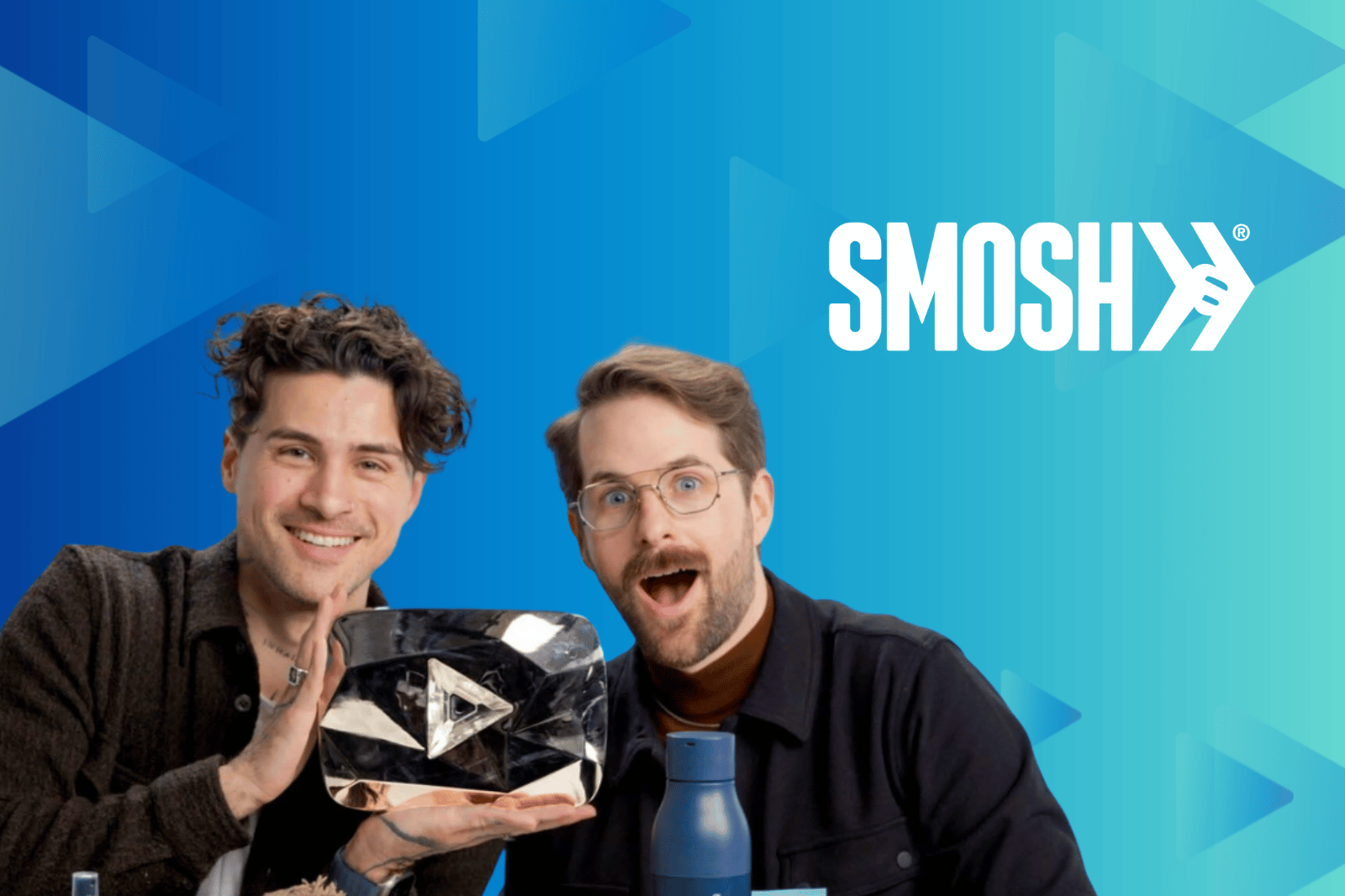

When the news broke in June 2023 that Ian Hecox and Anthony Padilla had reacquired Smosh, the internet didn't just react - it erupted. Long-time fans who had grown up watching the duo felt something rare: genuine excitement about a comeback that mean creative direction was back in the hands of Anthony and Ian.
The Smosh acquisition was a calculated business move, made possible by a funding structure most people hadn't heard of. And the studio expansion that followed? That was just the next chapter in the same story.
This is how it all came together.
The Smosh Story: A Quick Recap
If you need a refresher: Smosh started as one of YouTube's earliest breakout channels, built by Ian and Anthony from the ground up into one of the platform's most iconic presences. The channel was eventually sold, and in 2017, Anthony stepped away due to creative differences. Ownership then changed hands again, landing with Mythical, the company behind Rhett & Link's media empire.
For years, the original Smosh sat in a kind of limbo. The brand was still there. The audience still existed. But something was missing.
Then, in 2023, Ian and Anthony made their move.
The Buyback: More Than a Reunion
Repurchasing a channel with over 25 million subscribers and more than 18 years of content isn't just an emotional decision; it's a serious financial undertaking. And doing it the wrong way could have cost them the very thing they were trying to reclaim: control.
The most obvious routes available to most large purchases, bank loans, outside investors, licensing deals, and even mortgaging personal property, all come with strings attached. Investors want equity. Banks want guarantees. Licensing deals mean giving up revenue on a back catalog that, with the renewed excitement around the duo's return, was suddenly surging in views all over again.
Ian and Anthony knew what they didn't want. They wanted majority ownership. They wanted full creative control. They wanted to keep the profits from everything they'd already built. The question was how to fund a purchase of this magnitude without compromising on any of those things.
That's where Breeze came in.
How Breeze Made It Possible
Breeze had been in conversations with Anthony, Ian, and the Mythical team for months, working through funding options and structuring a solution that fit the complexity of the deal.
Rather than traditional financing, Breeze offered a cash advance built specifically around the Smosh YouTube channel and its revenue, both new content and the existing back catalog. No equity stake. No seat at the creative table. No personal guarantees. Just capital, structured around what the channel actually earns, with a fixed fee rather than an open-ended interest rate.
For Ian and Anthony, that distinction was everything.
Repurchasing Smosh was explicitly about regaining ownership and freedom. Taking on investors, even well-intentioned ones, could have introduced competing voices into creative decisions, posting schedules, and the long-term direction of the channel. Breeze's hands-off model meant none of that was on the table.
The result: Ian and Anthony came back as majority owners of Smosh, with full control over their content, their catalog, and their company, and Breeze retained zero equity or ownership stake.
What Ownership Actually Looks Like Now
Since the acquisition closed, here's where things stand:
Ownership and control. Anthony and Ian are at the head of the business. They make the decisions. Breeze is not an investors looking at profits, not a board requiring approvals in input n creative direction.
The back catalog. With over a decade of content, and a wave of renewed interest following the acquisition announcement, Smosh's back catalog is one of its most valuable assets. Ian and Anthony retained all rights and all profits from those videos. They didn't have to sell off pieces of their history to fund their future.
Creative direction. The content Smosh makes, how they make it, when they post it — all of that remains entirely in the hands of the team. Whether they want to invest in longer-form productions or lean into short-form, that's their call and no one else's.
As Ian and Anthony put it directly:
"We knew that we wanted to maintain complete control over our company and its existing library, which we had worked so hard on over the years. Breeze's model provided significantly more capital up front without any personal guarantees, which is ultimately why we decided to finance through the company."
Growth Creates New Problems - Good Ones
After the acquisition, Smosh didn't slow down to catch its breath. The opposite happened. New shows launched. The cast grew. The ambition behind each production got bigger. The audience, energized by the reunion, was hungry for more.
But that growth eventually ran into a ceiling that had nothing to do with creativity. The team had ideas. They had the talent. What they didn't have was space.
As CEO Alessandra Catanese put it plainly: "We physically just could not launch another show or take on a new project, no matter how much we loved it."
This is the inflection point that many successful creators eventually hit, and it catches a lot of them off guard. When a channel reaches a certain scale, the bottleneck stops being content ideas and starts being infrastructure. You can't run multiple productions simultaneously in a space that wasn't built for it. You can't build a structured team environment in a setup that was designed for a smaller operation. At some point, you have to build the machine that builds the content.
The New Studio: Building for What Comes Next
The solution was a purpose-built studio in Los Angeles. Not just an upgrade from what they had before, but a deliberate investment in the next phase of Smosh as a business.
The new space is designed to support what Smosh actually needs to keep scaling: the ability to run concurrent productions, bring larger concepts to life, and give the team the environment to collaborate and create at a higher level. It removes the logistical friction that was quietly slowing things down and replaces it with a foundation built for volume, variety, and ambition.
For a channel that thrives on ensemble content, evolving formats, and the kind of energy that comes from a real creative team working together in one place, that's not a luxury. It's a necessity.
Even for a channel as established and successful as Smosh, a move like this requires real capital. Studio builds, equipment, and operational costs don't wait for quarterly revenue to catch up. And the goal was never to drain reserves or delay the expansio, it was to move with confidence and keep the momentum going.
So once again, Breeze stepped in with the same approach: funding built around the channel's performance, structured to give the team the capital they needed without changing who's in charge of what they're building.
What Smosh Proves About Creator Funding
The Smosh story, both the acquisition and the studio, is a useful case study not just because of its scale, but because of its clarity.
At every decision point, Ian and Anthony knew exactly what they were optimizing for: ownership, creative freedom, and long-term control. They didn't compromise on any of those things. And they were able to make two major business moves, a channel buyback and a full studio build, without giving up equity, creative direction, or the profits from 18 years of content.
That's what the right funding structure makes possible. Not just access to capital, but access to it in a form that doesn't come with hidden costs attached.
"This funding has not only allowed us to return as the majority owners of the company we love so much, but also to expand our ever-growing verticals and new productions. We are more passionate than ever to create new content for our fans and continue the legacy we started over 18 years ago."
The old Smosh is back. And from the looks of it, they're just getting started.
Watch Anthony and Ian's full interview with Jon Youshaei about buying back Smosh here. And if you're a creator thinking beyond your next project, or about what you're actually building over the next few years, get in touch with Breeze to find out how much your channel qualifies for.
Q & A
Why did Anthony and Ian want funding?
When we decided to repurchase Smosh, we knew we wanted to do it right. That’s why we researched all of our options to ensure the company's stability, growth, and long-term success, which ultimately led us to finance our purchase through Breeze. This funding allowed us the opportunity to return as the rightful co-owners of Smosh and continue our mission of making people laugh at the incredible company we love so much.
What were some of the key factors they were looking for?
We knew that we wanted to maintain complete control over our company and its existing library, which we had worked so hard on over the years. We also knew that Breeze’s model provided significantly more capital up front without any personal guarantees, which is ultimately why we decided to finance through the company.
Why did they choose Breeze over other alternatives?
Breeze's offer was based on both new and library content which resulted in better terms than their competitors were offering. This flexibility allowed us more freedom and capital to better operate the business throughout the course of the deal and beyond.
Can you share any details about why or how this funding option worked out for Smosh?
This funding has not only allowed us to return as the majority owners of the company we love so much, but also to expand our ever-growing verticals and new productions. We are more passionate than ever to create new content for our fans and continue the legacy we started over 18 years ago!