Andreas Eskander: A Day On Set
BTS of his biggest shoot day yet and Q & A with Andreas and his manager John Paul
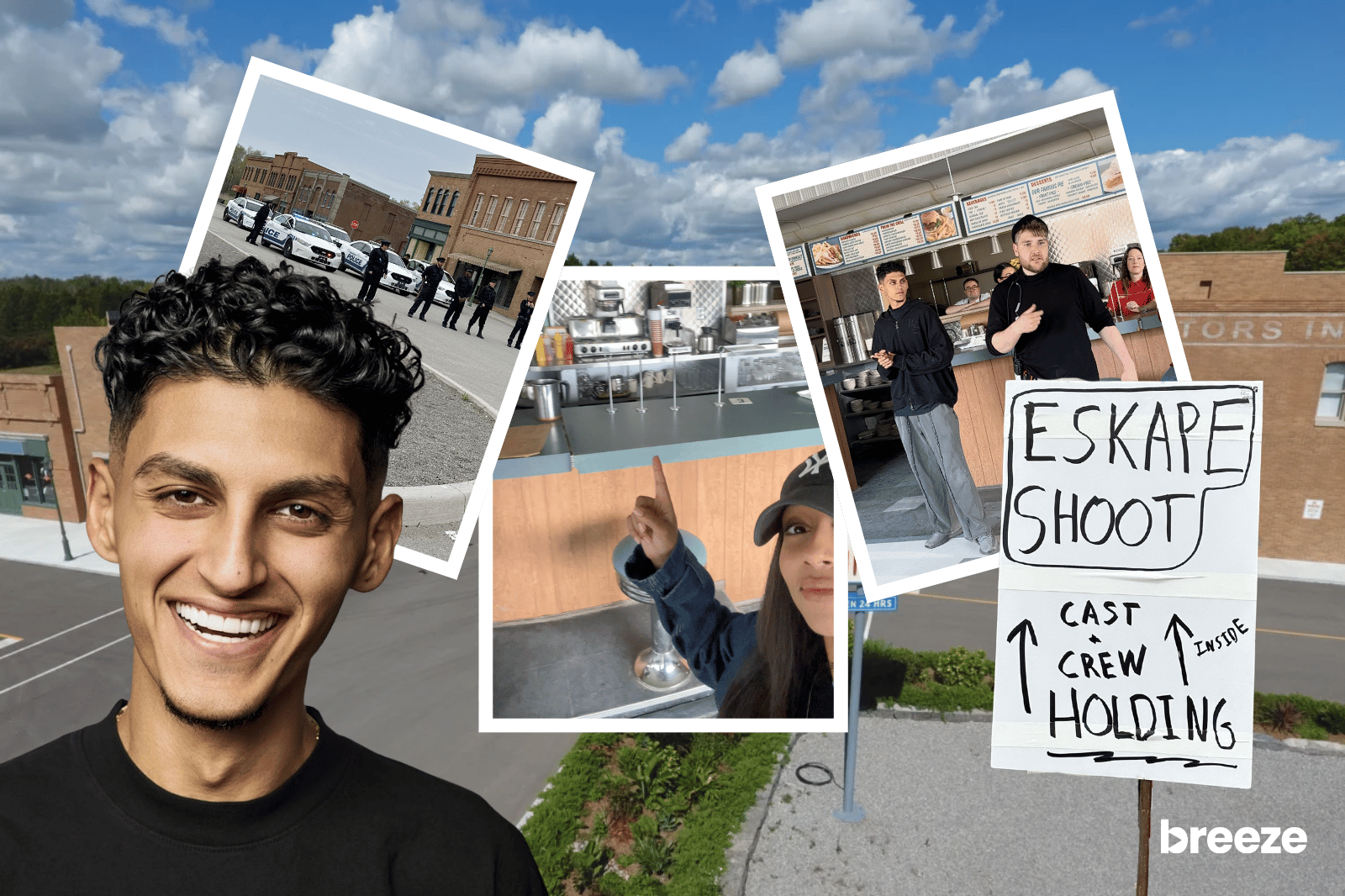

We recently spent a day on set with Andreas Eskander and his team while they filmed one of their biggest productions to date, a full-scale shoot that transformed an entire location into a working, cinematic town!
Being on set made it obvious that top creators are operating with production that is on a whole other level and speed. Here’s how the day went!
Arriving On Set — To A Full Town:
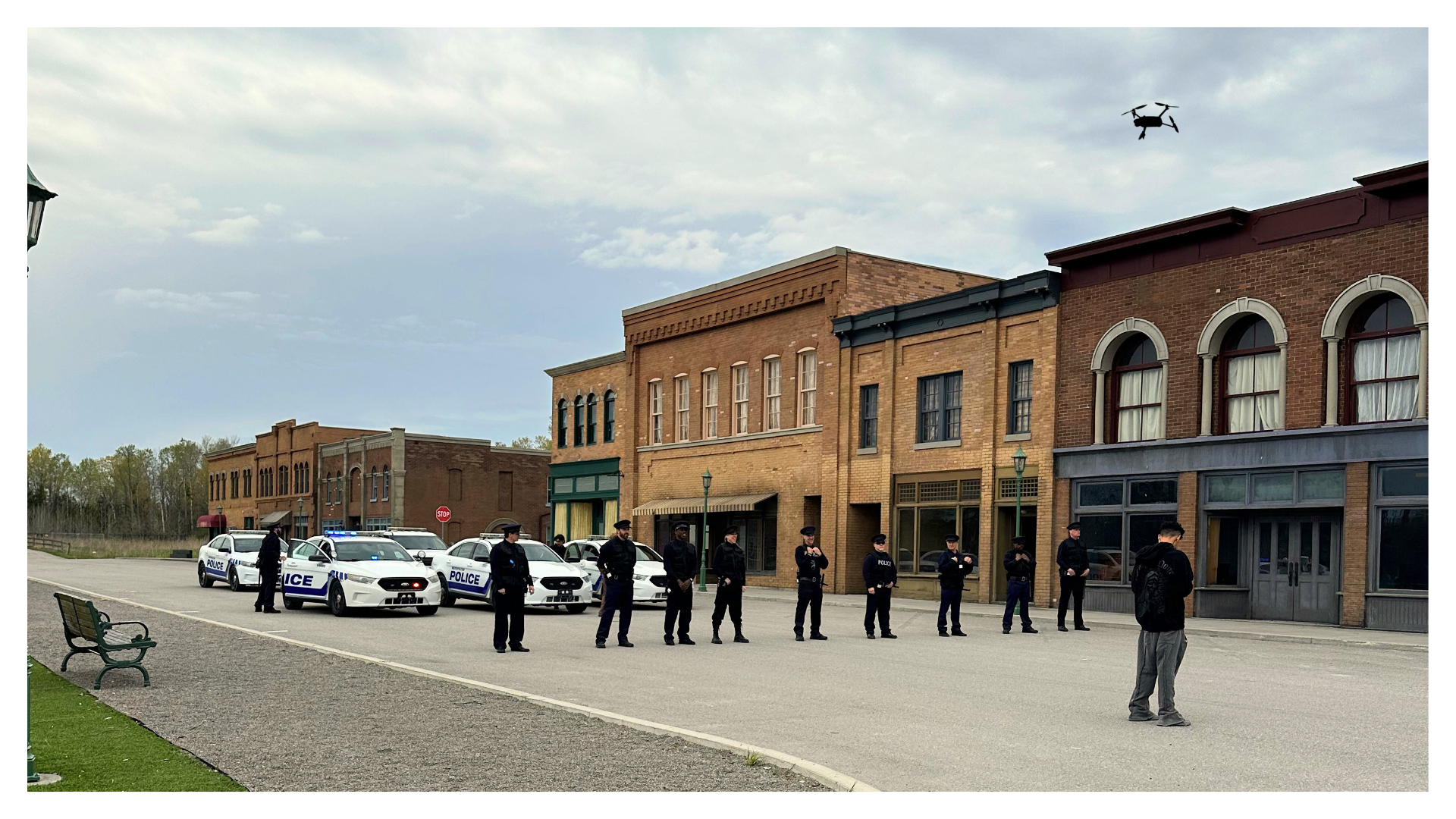
When we first arrived on set, we pulled into what looked like a fully secluded town that had been transformed into a working production space. There were standalone buildings, a fully built diner, a gas station setup, and even a police station complete with multiple squad cars staged outside. The space was customized for the shoot and brought to life with 40+ extras.
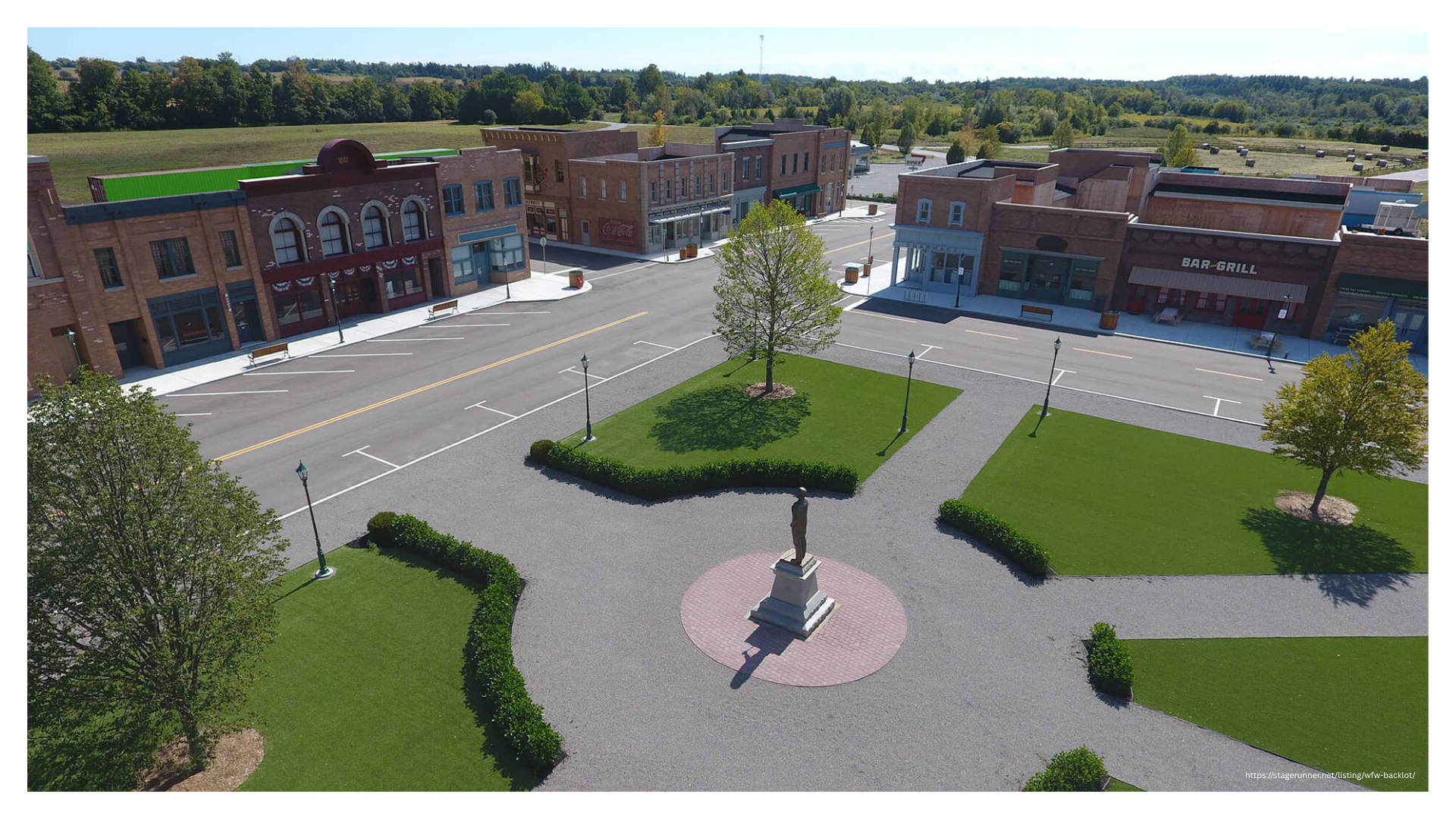
We watched Andreas and his team move between shot locations throughout the day, adjusting scenes, reviewing shots, and coordinating with multiple teams at once. This was not a one-person operation, it was a coordinated production with dozens of moving parts.
What We Loved Seeing (but didn’t expect):
One of the biggest takeaways was just how many roles are involved in making a single creator video happen at this scale. Beyond the creator and camera crew, there were:
- Directors guiding performances and scenes
- Producers managing timing and logistics
- Special effects teams handling explosions, smoke, and action sequences
- Lighting teams constantly adjusting for continuity

It was really fun getting to speak with each team throughout the day, learning about things like lighting and smoke effects, seeing how they pivoted with weather changes, and watching everything come together in real time as the production rolled forward.
These are the kinds of complexities and operational costs most people never associate with YouTube content.
How Big Creator Productions Have Become…
A few moments throughout the day really put the scale of the production into perspective. We watched explosions being carefully coordinated with safety teams, with every detail planned and controlled down to the timing of each shot. Directors and Andreas were actively blocking scenes with actors in real time, adjusting performances and camera movement as each take unfolded, while set teams reset and prepared each scene to keep everything consistent.
Across the set, cameras, drones, and lighting rigs were continuously being repositioned between shots, with different teams working in sync to keep everything moving smoothly. At one point, we even got asked to jump in as extras in the film which made the experience even more fun and collaborative.
This also wasn’t a one-off film shoot that takes months of post-production to release. This is now the standard for many top creators: large-scale productions filmed in a single day and turned around incredibly fast. This shoot was filmed in one day and the final video was posted within a week! Compared to traditional film production timelines that can take months (or even longer) to complete, the turnaround is extremely fast. It’s a reminder that creator businesses don’t just compete on production quality anymore, they compete on output speed as well. The ability to consistently produce high-quality content at this pace is becoming a defining advantage for top creators.
What This Means For Creators:
Being on set made one thing very clear: today’s creators are no longer just “making videos.” They’re building production companies, managing teams, and operating at a scale that looks more like traditional film production than social media content.
But that level of growth comes with one major requirement: capital. From hiring crews, renting locations, building sets, paying talent, and covering production logistics, the cost of scaling creative ambition has never been higher.
That’s where creator funding becomes more than just financing. It becomes infrastructure. For Andreas and his team, it’s what allowed bigger ideas to turn into real productions and what continues to support the next stage of their growth.
Watch Andreas’ final video here and see if you can spot the Breeze team in the back 😉
Q & A
Insights from Andreas Eskander
Q: Why did you want funding?
Andreas: Honestly, to make bigger and better videos!
Q: How has filming, production, or planning changed with access to capital?
Andreas: Well, today we were able to rent out an entire town set just to get a pretty cool video. And there’s been so many more people helping in the backend now! Before it was just me with a camera and now it's me with a team of 10. These sets really allow me to go beyond going to the park and film, I can actually have a controlled environment where I can do cool stuff!
Q: Was there a dream project you've had for a long time that you didn't think you could execute because of capital?
Andreas: I’ve had the idea for this current shoot on the back burner for a long time. Now, doing it with capital has helped a lot. With certain videos it takes a lot longer to recoup the money, so having it upfront and being able to freely do everything I want is the best thing that I could possibly hope for. There are just so many other ideas now!
Q: How have you grown with funding?
Andreas: I went from 700K subscribers to 13M subscribers in under a year! I feel like the bigger productions and the bigger team have helped me a lot with that.
Insights from John Paul Hannah (Andreas' Manager)
Q: Was there a moment you realized Andreas needed capital for content creation? Were there any key factors that made Breeze stand out?
John Paul Hannah: As Andreas’ audience continued to grow, so did the ambition and scale of the content we wanted to produce. We were constantly developing larger, more innovative concepts that required increased investment in locations, production design, talent, equipment, and overall execution. It became clear that access to working capital would allow us to move faster, execute at a higher level, and bring ideas to life without compromising on quality.
As a manager, part of my responsibility is evaluating every available option and identifying the best partners for the business. When it came to creator funding, Breeze stood out for two reasons: their willingness to deploy meaningful capital and the competitiveness of their financing terms. More importantly, Breeze demonstrated a genuine understanding of the creator economy. They weren’t simply providing funding—they were investing in creators and the long-term growth of their businesses.
Q: How has funding changed the way you manage and support content production and channel growth?
John Paul Hannah: Funding has given us the ability to fully execute on creative ideas without being forced to make compromises that could impact the final product. In content creation, production quality often plays a significant role in audience engagement, and having access to capital has allowed us to maintain that standard consistently.
It has also enabled us to access resources, locations, assets, and production opportunities that otherwise may have been out of reach. Rather than spending time determining what we need to remove from a concept to fit a budget, we’re able to focus on delivering the strongest possible version of the idea. That shift has had a meaningful impact on both our production process and our ability to continue growing the channel.
Q: You manage a lot of the administration and behind-the-scenes operations across fast-turnaround productions. How do you manage video scope and costs while moving so quickly?
John Paul Hannah: The key is building a team you can trust. Modern creator productions have evolved dramatically over the last several years and, in many cases, operate at a level comparable to traditional television and film productions. Managing that level of complexity on accelerated timelines requires experienced people who can take ownership of their responsibilities and execute efficiently.
When everyone understands their role and is aligned toward the same goal, it becomes possible to move quickly without sacrificing quality. Strong systems, clear communication, and dependable team members are what allow us to consistently deliver ambitious productions on tight schedules.
Q: When and how would you recommend managers or creator support teams look into capital for the creators they work with?
John Paul Hannah: I don’t believe there’s a universal milestone at which every creator should seek funding. Every creator’s business is different, and the decision should be based on their growth trajectory, opportunities, and overall strategy.
That said, if a creator is experiencing meaningful growth and their audience is responding positively to increased production value, access to capital can be a powerful tool for accelerating that momentum. My advice is to look beyond the funding itself and focus on finding a long-term partner. The right financing partner should understand the creator economy, support your growth objectives, and be invested in your success over time. Capital can help unlock opportunities, but choosing the right partner is what creates sustainable growth.